








Many women using hormonal contraception decide to stop taking it at some point – whether due to planning a pregnancy, a lifestyle change, or simply because they want to give their body freedom. But what actually happens in a woman's body after discontinuation?
Restoration of the natural cycle
Hormones in contraception suppress ovulation. After discontinuation, the body gradually "remembers" its own rhythm – ovulation begins to function again, and the cycle can gradually stabilize. For some women, this takes a few weeks; for others, several months. The first cycles tend to be longer and more variable (longer follicular phase) before they stabilize.
Hormone fluctuations
The body adapts to the new situation – estrogen and progesterone levels change naturally. This can bring temporary changes in mood, energy, or even sleep quality.
Skin and hair
If contraception helped to suppress acne, it may temporarily reappear after discontinuation. However, some may find their skin condition improves – everything is very individual.
Fertility
Important to know: fertility can return almost immediately, even if the cycle is not yet "perfect." Therefore, pregnancy is possible even shortly after discontinuation.
PMS and menstrual symptoms
Abdominal pain, tender breasts, or mood swings that contraception was able to alleviate may reappear.
Discontinuing hormonal contraception is a natural process during which the body recalibrates to its own hormonal rhythm. For most women, this means only temporary changes. Supporting the body's adaptation can be achieved not only through a healthy lifestyle but also through targeted nutritional supplements – whether you are planning a pregnancy or simply want to feel better in your own body.
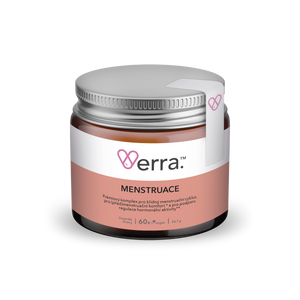
Some women experience micronutrient deficiencies – long-term use of contraception can affect levels of B vitamins (especially B6, B12, folate), magnesium, zinc, or selenium. (These and other substances can be found in our Menstruation complex)
-
B-vitamins and folate: essential for estrogen metabolism and healthy embryonic development in early pregnancy.
-
Zinc and selenium: supporting hormonal balance and thyroid function.
-
Magnesium: contributes to psychological well-being and reduces fatigue.
Supplementing these substances can ease the transitional period and simultaneously prepare the body for a healthy pregnancy.
Tip: Every body reacts differently. Some women experience almost no changes, while others go through a longer transitional period. If you have doubts or a long-term irregular cycle, it is definitely a good idea to consult a gynecologist.
Sources
Girum, Tadele, and Abebaw Wasie. “Return of fertility after discontinuation of contraception: a systematic review and meta-analysis.” Contraception and reproductive medicine vol. 3 9. 23 Jul. 2018, doi:10.1186/s40834-018-0064-y
Palmery M, Saraceno A, Vaiarelli A, Carlomagno G. Oral contraceptives and changes in nutritional requirements. Eur Rev Med Pharmacol Sci. 2013 Jul;17(13):1804-13. PMID: 23852908.
https://www.sciencedirect.com/science/article/pii/S0015028216454956

