




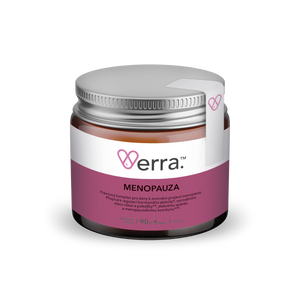


At Verra, we have long collaborated with experts and doctors in product development, basing our formulations on ingredients supported by robust and reliable data. Although, unlike medicines, the effect of dietary supplements does not have to be tested before being placed on the market, we consider research support to be crucial, especially in the field of women's health, where many topics do not receive the attention they deserve. Therefore, in cooperation with Charles University, we decided to conduct a clinical study focused on the issue of menstrual pain.
Why menstruation hurts
Painful menstruation affects a large proportion of women. One of the most common causes is an increased production of prostaglandins – hormone-like substances that are naturally produced in the lining of the uterus. If the body produces more of them than usual, they can cause stronger uterine contractions, impaired blood flow to the uterus, and thus greater pain.
In most women, prostaglandins rise in the first days of menstruation, when the uterine lining sheds. This is when cramps are usually most intense. However, women differ in the rate of prostaglandin production and their sensitivity to them – which explains why some women hardly feel menstruation, while others suffer every month.
What was the subject of the study
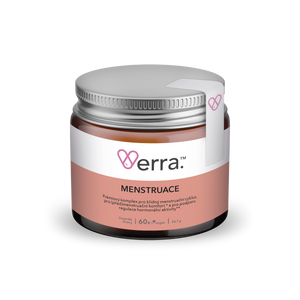
The study focused on the product Complex Menstruation, which contains vitamins, minerals, and plant extracts with a potential influence on the course of menstruation. The aim was to determine whether its long-term use can affect prostaglandin levels – i.e., substances that significantly contribute to discomfort during menstruation.
How the study was conducted
The study design and evaluation of results were ensured by Charles University. The research was conducted on 36 healthy women aged 18–44, who were divided into three groups:
-
control group (without any supplementation),
-
placebo group (used visually identical capsules without active ingredients),
-
group using Menstruation Verra (2 capsules daily).
Measurements were taken during three consecutive menstrual cycles. On day 2 of each cycle – when prostaglandin levels are usually highest – participants provided a saliva sample for analysis. At the same time, they rated their pain intensity using standardized scales.
Study results
After three cycles, the group using Menstruation Verra had significantly lower prostaglandin levels than both the placebo and control groups (p = 0.0004). The results thus show that the use of the product was associated with a decrease in substances that intensify menstrual cramps and pain in the body. This may mean a milder course of menstruation.
At the same time, a positive correlation between prostaglandin levels and subjectively perceived pain was confirmed (p = 0.0035): the higher the values women had, the more significant difficulties they usually described.
You can find the full study HERE.

