






Menstruation is a natural part of most women's lives. Although it often brings a certain discomfort, a healthy and regular menstrual cycle is a sign that a woman's body is functioning as it should. Pain during menstruation is common, but it should be manageable and not prevent us from normal activities. Today we will talk more about why menstruation is usually painful, why each of us perceives pain differently, and how to recognize whether our pain is normal or if it is time to seek medical help.
The role of prostaglandins and individual sensitivity
Pain during the first two days of menstruation is influenced by substances called prostaglandins. These compounds are formed in the uterine lining and are responsible for uterine muscle contractions, which help to shed the uterine lining (endometrium). However, higher levels or increased sensitivity to prostaglandins cause stronger contractions, which temporarily reduce blood flow. This brings typical sharp pain and cramps.
Individual differences in pain perception are influenced by several factors. Genetics plays a role in the sensitivity of nociceptors (nerve receptors) in the uterus, which transmit pain signals to the brain. Some women have a more sensitive nervous system, while others have a better ability to effectively regulate pain perception. Hormonal levels and psychological state can also influence pain, which is why its intensity and perception are very individual.
How to recognize and manage pain
Painful menstruation is divided into two main categories. Primary dysmenorrhea is typical for women with normal uterine anatomy, often appearing from the first menstruation, and is pain caused by an increased amount of prostaglandins without any underlying disease.
Secondary dysmenorrhea is pain caused by a specific health problem, such as endometriosis, fibroids, or inflammation. It is often accompanied by other symptoms, such as pain during intercourse, irregular menstruation, or fertility problems.
If the pain prevents normal activities, is very severe, does not improve even after taking common medications, or worsens, it is important to contact a doctor. It is then necessary to distinguish primary from secondary dysmenorrhea and determine appropriate treatment, as the secondary form may require specialized interventions.
What can help us with painful menstruation?
There are several effective ways to relieve pain during menstruation, even without analgesics.
1) Heat
Applying a warm compress helps to relax the uterine muscles and alleviate contractions. A 2012 study compared the effect of ibuprofen and a heat patch, with results showing that their analgesic effect is comparable.
2) Yoga
Gentle stretching and breathing help to suppress menstrual pain by reducing the production of prostaglandins and uterine muscle ischemia. According to a 2019 study, yoga is an effective method for alleviating menstrual pain.
3) Essential oils
Research shows that regular gentle massages of the lower abdomen with essential oils (e.g., cinnamon, clove, rose, and lavender) can help relieve pain and affect bleeding intensity in the premenstrual period.
4) Dietary supplements
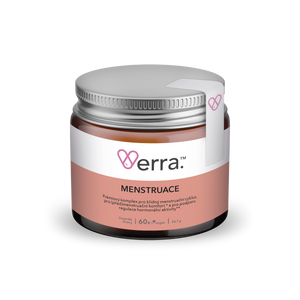
High-quality dietary supplements containing micronutrients (e.g., zinc), plant extracts such as chamomile, vitamins, and omega-3 fatty acids can also have a supportive effect. These help maintain balance in the body, which can have a positive impact on menstrual comfort.
Menstrual pain is not something we should consider an inevitable fate. Understanding the mechanisms in our body gives us the opportunity to react better and decide – whether it is seeking professional help or supporting the body and hormonal health.
Sources:
FERRIES-ROWE, Elizabeth; COREY, Elizabeth and ARCHER, Johanna S. Primary Dysmenorrhea: Diagnosis and Therapy. Online. Obstetrics. 2020, vol. 136, no. 5, pp. 1047-1058. ISSN 0029-7844. Available from: https://doi.org/10.1097/aog.0000000000004096.
Marzouk, T. M. F. (2013). The Effect of Aromatherapy Abdominal Massage on Alleviating Menstrual Pain in Nursing Students: A Prospective Randomized Cross-Over Study. Evidence-Based Complementary and Alternative Medicine, 1–6.doi:10.1155/2013/742421
NAVVABI RIGI, Shahindokht; KERMANSARAVI, Fatihe; NAVIDIAN, Ali; SAFABAKHSH, Leila; SAFARZADEH, Ameneh et al. Comparing the analgesic effect of heat patch containing iron chip and ibuprofen for primary dysmenorrhea: a randomized controlled trial. Online. In: BMC Women's Health. 2012. ISSN 1472-6874. Available from: https://doi.org/10.1186/1472-6874-12-25.
Kim, S.-D. (2019). Yoga for menstrual pain in primary dysmenorrhea: A meta-analysis of randomized controlled trials. Complementary Therapies in Clinical Practice. doi:10.1016/j.ctcp.2019.06.006
Snipe RMJ, Brelis B, Kappas C, Young JK, Eishold L, Chui JM, Vatvani MD, Nigro GMD, Hamilton DL, Convit L, Carr A, Condo D. Omega-3 long chain polyunsaturated fatty acids as a potential treatment for reducing dysmenorrhoea pain: Systematic literature review and meta-analysis. Nutr Diet. 2024 Feb;81(1):94-106. doi: 10.1111/1747-0080.12835. Epub 2023 Aug 6. PMID: 37545015.
Healthline. What Causes Painful Menstrual Periods and How Do I Treat Them? Online. In: . 2024. Available from: https://www.healthline.com/health/painful-menstrual-periods.

